
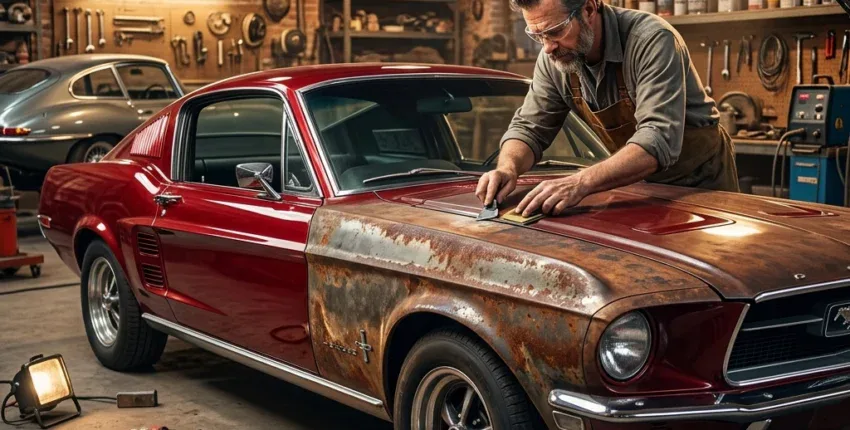
Restoring a classic car is more than a hobby; it is an act of preservation. For many enthusiasts, it is about bringing history back to life and ensuring that a piece of automotive heritage continues to turn heads for another fifty years. However, the path from a “barn find” to a “timeless masterpiece” is paved with hidden challenges that many shops and DIY guides gloss over.
When you look at a shimmering vintage Mustang or a sleek 1950s pickup, you are seeing the final 5% of the work. The real “secrets” of a high-end restoration lie deep beneath the surface, specifically in how the metal was treated and how the paint was layered. At John’s Automotive Restoration & Repair, we believe in transparency. Understanding the technical realities of rust and paint won’t just save you money: it will save your car from a slow, structural demise.
The “Cancer” of Classics: Why Most Rust Repairs Fail
The most significant problem in classic car restoration is the misunderstanding of oxidation. Rust is often referred to as “automotive cancer” for a reason: if you don’t remove every single microscopic spore, it will return, often more aggressively than before.
The Problem: Surface-Level Fixes
Many owners make the mistake of thinking that if they can’t see the rust, it isn’t there. They use “rust converters” or “sealers” over pitted metal and then move straight to body filler. This is a recipe for disaster. Rust thrives on moisture and oxygen. Even a tiny pocket of trapped air under a fresh coat of paint will eventually cause the paint to bubble and lift.
The Expert Solution: Total Eradication
True professionals know that the only way to “fix” heavy rust is to cut it out. This involves identifying the Heat Affected Zone (HAZ): the area around a rust patch where the metal has been thinned or compromised.
In our full-service restorations, we utilize several industry-specific techniques:
- Media Blasting: Using specialized abrasives to strip the car to bare metal without warping the panels.
- Butt Welding: Joining two pieces of metal edge-to-edge. Experts avoid Lap Welds (overlapping metal), which create a “sandwich” where moisture can hide and restart the rusting process from the inside out.
- Cavity Wax: A specialized, petroleum-based coating injected into “blind” areas like rocker panels and frame rails where spray guns cannot reach.

The Secret of the Frame: It’s What’s Inside That Counts
One of the things some shops won’t tell you is that a beautiful body can sit on a crumbling foundation. If you are investing thousands into a high-end paint job, you must ensure the structural integrity of the vehicle first.
The Problem: Hidden Frame Decay
Classic cars often featured “C-channel” or “Boxed” frames. Over decades, debris and water collect inside these channels. You might have a straight, rust-free fender, but if your frame is thinning, the car’s alignment and safety are compromised. This is a common pitfall mentioned in our guide on 7 mistakes you’re making with vintage car restoration.
The Expert Solution: Structural Inspection
Before the first drop of paint is mixed, you must perform a comprehensive frame analysis. We look for “scaling”: thick flakes of rust that indicate the metal has lost its structural density. If the frame is compromised, it requires specialized car frame repair to ensure the vehicle is safe for the road.
The Chemistry of a Flawless Finish: More Than Just Color
When you see a “show-quality” paint job, you are actually looking at a complex chemical sandwich. The “secret” here is that the brand of the topcoat matters much less than the quality of the foundation.
The Problem: Cheap Primers and “Shrinkage”
A common issue with lower-end restorations is “mapping” or “sand scratch swelling.” This happens when cheap primers are used. These materials are porous and continue to “off-gas” or shrink for months after the car is finished. You might take delivery of a perfect car, only to see sanding marks appear under the paint six months later.
The Expert Solution: Epoxy Primers and Long Cure Times
Experts use Epoxy Primer as the very first layer on bare metal. Unlike standard primers, epoxy is non-porous. It creates an airtight, waterproof seal that prevents rust from ever starting again.
The process we follow involves:
- Epoxy Sealing: To lock the metal away from the elements.
- High-Build Primer: This is a “filler” primer used to block-sand the body perfectly flat.
- Flash Time: This is the critical waiting period between coats. Rushing “flash times” traps solvents in the paint, leading to a dull finish or “solvent pop” (tiny bubbles).

Why Perfection Costs More Than You Think
Transparency in restoration means talking about the “L-word”: Labor. A “driver-quality” paint job might take 40 hours. A “concours-quality” (show-winning) finish can easily exceed 200 hours.
The Problem: The High Cost of “Blocking”
Most of the cost of a high-end restoration isn’t the paint: it’s the Block Sanding. This is the manual process of sanding the primer with long, flat blocks to ensure the body panels are laser-straight. Any imperfection in the metal is magnified tenfold once a high-gloss clear coat is applied.
The Expert Solution: Managing Expectations
You need to decide early on if you want a car to drive or a car to display in a museum. A “perfect” car requires levels of labor that significantly impact the cost of restoring a classic car. We always recommend a balanced approach: focus your budget on mechanical reliability and rust prevention first, then decide how much you want to spend on cosmetic perfection.

The Final Details: Pinstriping and Engine Aesthetics
Once the rust is gone and the paint is cured, the final “secrets” involve the details that separate the pros from the amateurs.
The Problem: The “Over-Restored” Look
Sometimes, restorers use modern materials that look “too new” for a vintage car, making the restoration feel disconnected from its history.
The Expert Solution: Period-Correct Finishing
Whether it’s rebuilding an engine to factory specs or adding professional pinstriping, the goal is cohesion. Using the right sheen of black on the chassis (usually a 60% gloss) and the correct fuel line materials ensures that your car doesn’t just look good: it looks “right.”
Protecting Your Investment
After spending months or years on a restoration, the biggest mistake you can make is neglecting maintenance. Rust can return if the vehicle isn’t cared for.
- Climate Control: Moisture is the enemy. Store your classic in a dry environment.
- Regular Inspections: Even a restored car needs regular fuel system inspections and cooling system flushes to prevent internal corrosion.
- Mechanical Sympathy: A restored car needs to be driven. Seals stay lubricated and fluids stay circulated when the car is in motion.

Partner with the Experts at John’s Automotive
Restoring a classic car is a journey filled with technical hurdles and emotional rewards. While “secrets” like epoxy sealing and butt welding might seem like small details, they are the difference between a car that lasts five years and one that lasts fifty.
If you are ready to start your restoration journey or need a professional eye to evaluate a potential project, we are here to help. From body repair services in Greenwood Lake, NY to complete frame-off restorations, our team combines old-world craftsmanship with modern technical expertise.
Ready to bring your dream car back to life? Contact us today or schedule an appointment to discuss your project. Let’s build something timeless together.