
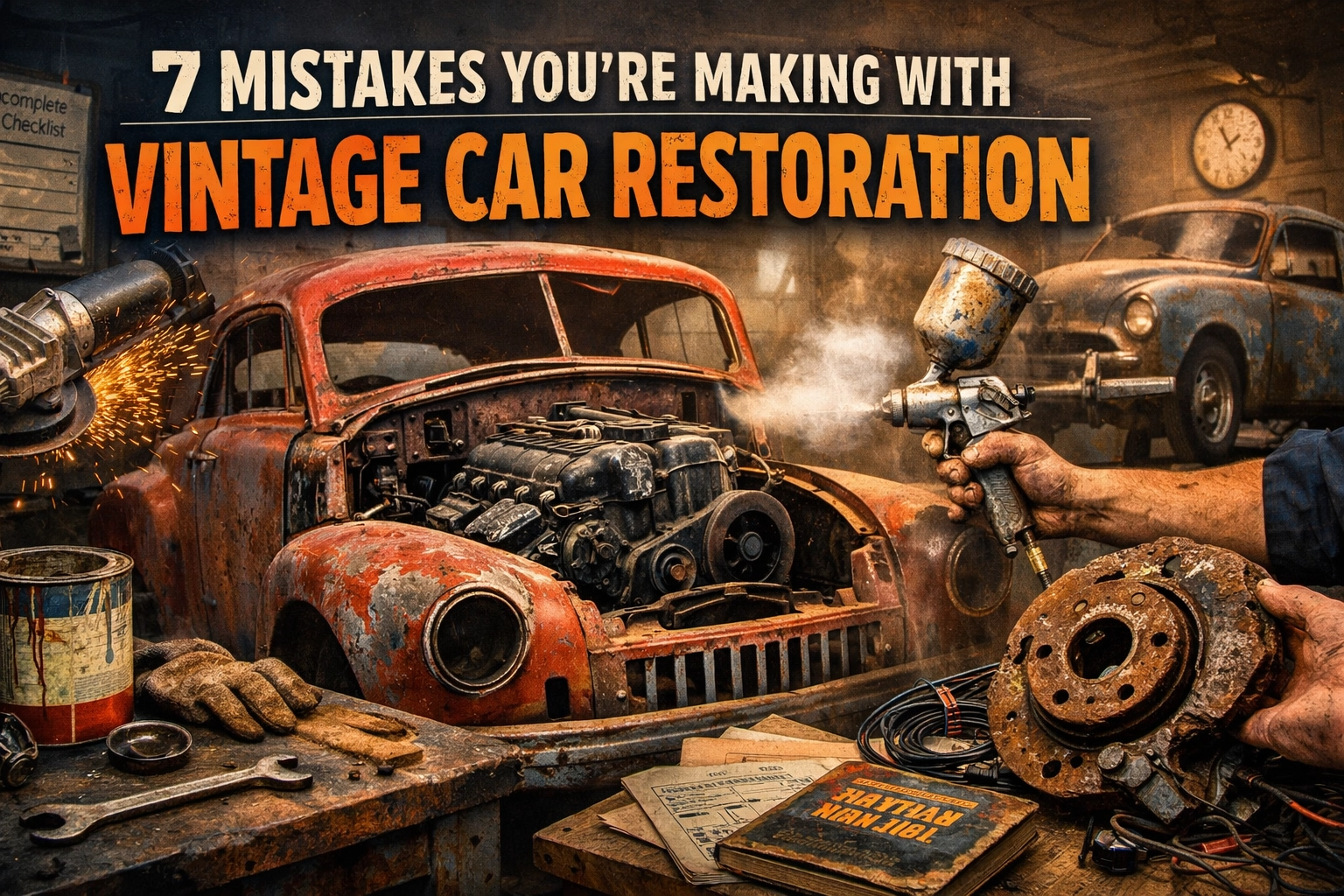
There is something undeniably romantic about the idea of rescuing a forgotten relic from a dusty barn and breathing life back into it. Whether it’s the iconic lines of a 1960s muscle car or the sophisticated curves of a European roadster, vintage car restoration is a journey that connects us to automotive history. It’s a labor of love that promises the reward of a gleaming, roaring masterpiece at the finish line.
However, the road from “barn find” to “showstopper” is rarely a straight line. Ask any seasoned collector or the experts at John’s Automotive Restoration & Repair, and they will tell you that restoration is as much about patience and strategy as it is about wrenches and grease. Unfortunately, many enthusiasts: both beginners and those with a few projects under their belts: fall into the same traps that can turn a dream project into a financial and emotional drain.
Are you about to embark on a project, or perhaps you’re currently mid-build and feeling stuck? Let’s take a look at the seven most common mistakes you might be making with your restoration and how you can steer clear of them.
1. Diving In Without a Comprehensive Plan
One of the biggest mistakes you can make is starting a classic car restoration without a clear roadmap. It is incredibly tempting to start tearing things apart the moment the car hits your garage. You want to see what’s underneath the grime, right? But without a plan, you quickly end up with a garage full of labeled (or worse, unlabeled) bags of bolts and a chassis you don’t know how to put back together.
A successful restoration requires a “Build Book.” This should outline your ultimate goal. Are you building a “driver” that you can take to the grocery store, or a “Concours” level show car? The level of detail and the parts you choose will vary wildly based on this decision.
The Solution: Before the first bolt is turned, document everything. Take hundreds of photos of how parts are connected. Create a phase-by-phase timeline: disassembly, bodywork, mechanicals, interior, and final assembly. Having a structured plan keeps you motivated and ensures you don’t lose your way when the project gets tough.
2. Underestimating the Real Cost of Restoration
We’ve all seen the reality TV shows where a car is restored in a week for a few thousand dollars. In the real world, that simply isn’t the case. Many owners start with a healthy budget, only to find that it’s gone before the primer even hits the metal. Between hidden rust, rare parts sourcing, and professional labor, costs add up fast.
If you aren’t prepared for the financial commitment, the project often stalls, and the car ends up being sold as a “partially finished project” for a fraction of what was invested. We often recommend readers check out our guide on the cost of restoring a classic car to get a realistic sense of what to expect.
The Solution: Calculate your estimated budget: and then add 20-30% as a “surprise” buffer. Restoration always uncovers hidden issues, and having that financial cushion prevents the project from becoming a source of stress.
3. Skipping the Vital Research Phase
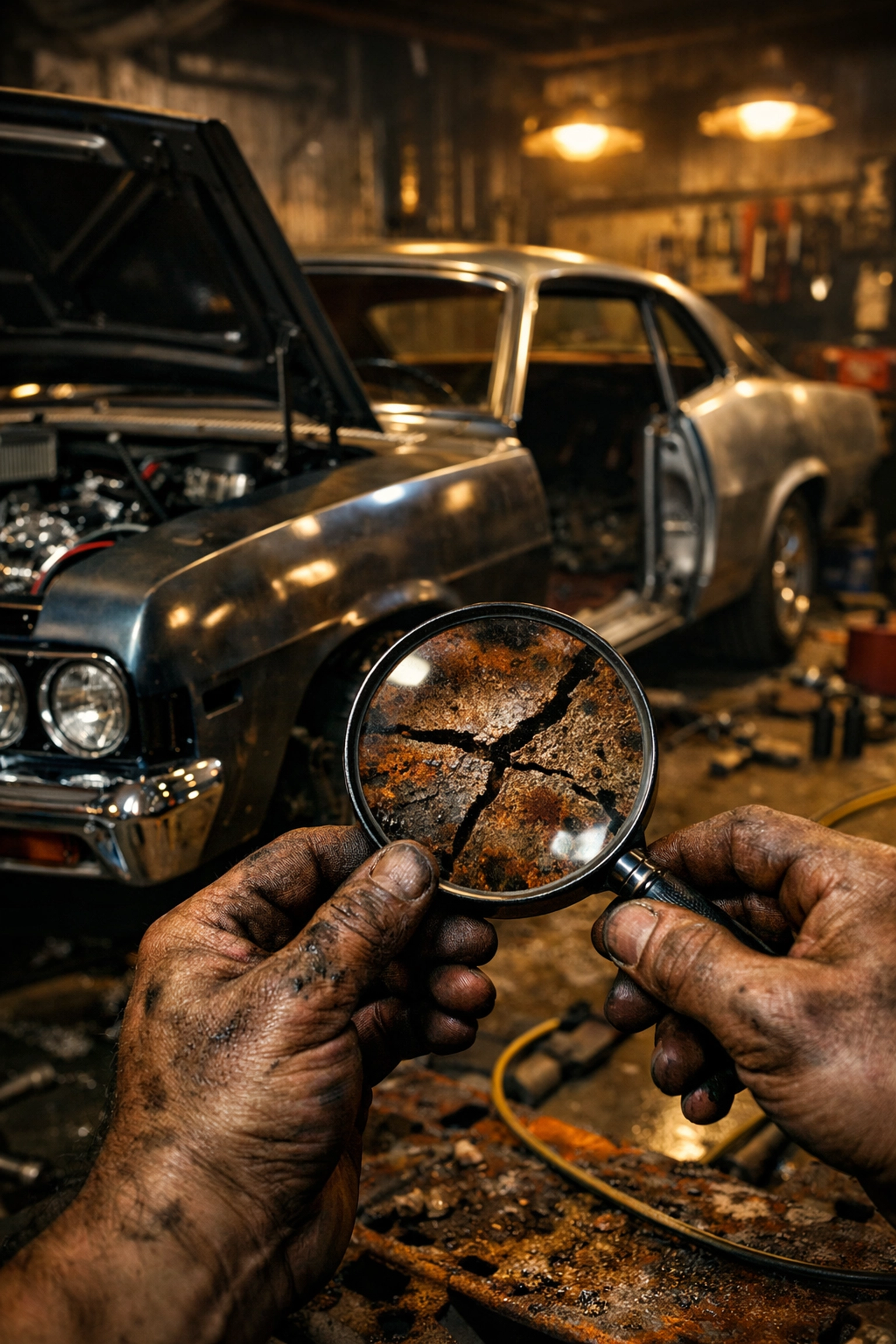
Not all vintage cars are created equal. A common mistake is buying a vehicle or parts without researching the specific nuances of that model and year. Is the car a “matching numbers” vehicle? Does it have the original transmission? For many collectors, the value of a vintage car restoration lies in its authenticity.
If you buy a 1967 Mustang part for a 1968 model, you might find that while it “fits,” it isn’t period-correct, which can hurt the car’s resale value later on. Furthermore, you need to research the availability of parts. Some cars are easy to find components for, while others might require you to scour European swap meets for a single door handle.
The Solution: Join forums, talk to local experts, and buy the assembly manuals for your specific vehicle. Knowing exactly what you’re working with saves time and prevents expensive buying mistakes.
4. Cutting Corners on Bodywork and Frame Integrity
It is very easy to focus on the shiny topcoat of paint and ignore what lies beneath. However, the foundation of any great restoration is the metalwork. Many DIYers try to hide rust with body filler (Bondo) or skip the crucial step of checking the frame for straightness and strength.
Ignoring structural integrity is not just a cosmetic mistake; it’s a safety hazard. A car that looks beautiful but has a rotted frame or poorly patched floorboards won’t handle correctly and won’t protect you in an accident. If you suspect your project has deep-seated issues, it’s worth learning how to identify and fix a damaged car frame before moving forward.
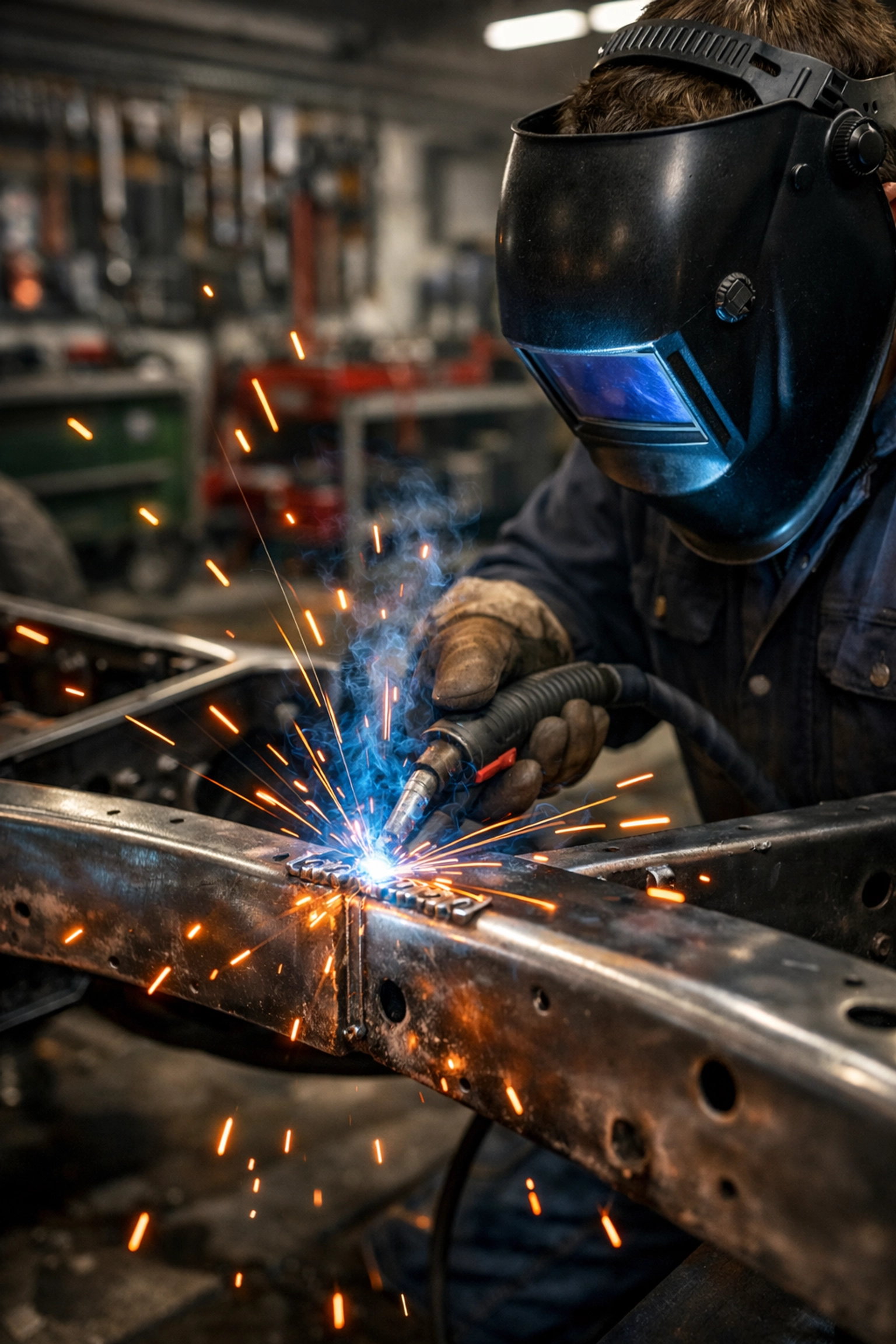
The Solution: Do the metalwork right the first time. Cut out the rust and weld in new metal. If the frame is questionable, have it checked by professionals who understand body repair techniques. A solid foundation ensures the car lasts for another fifty years.
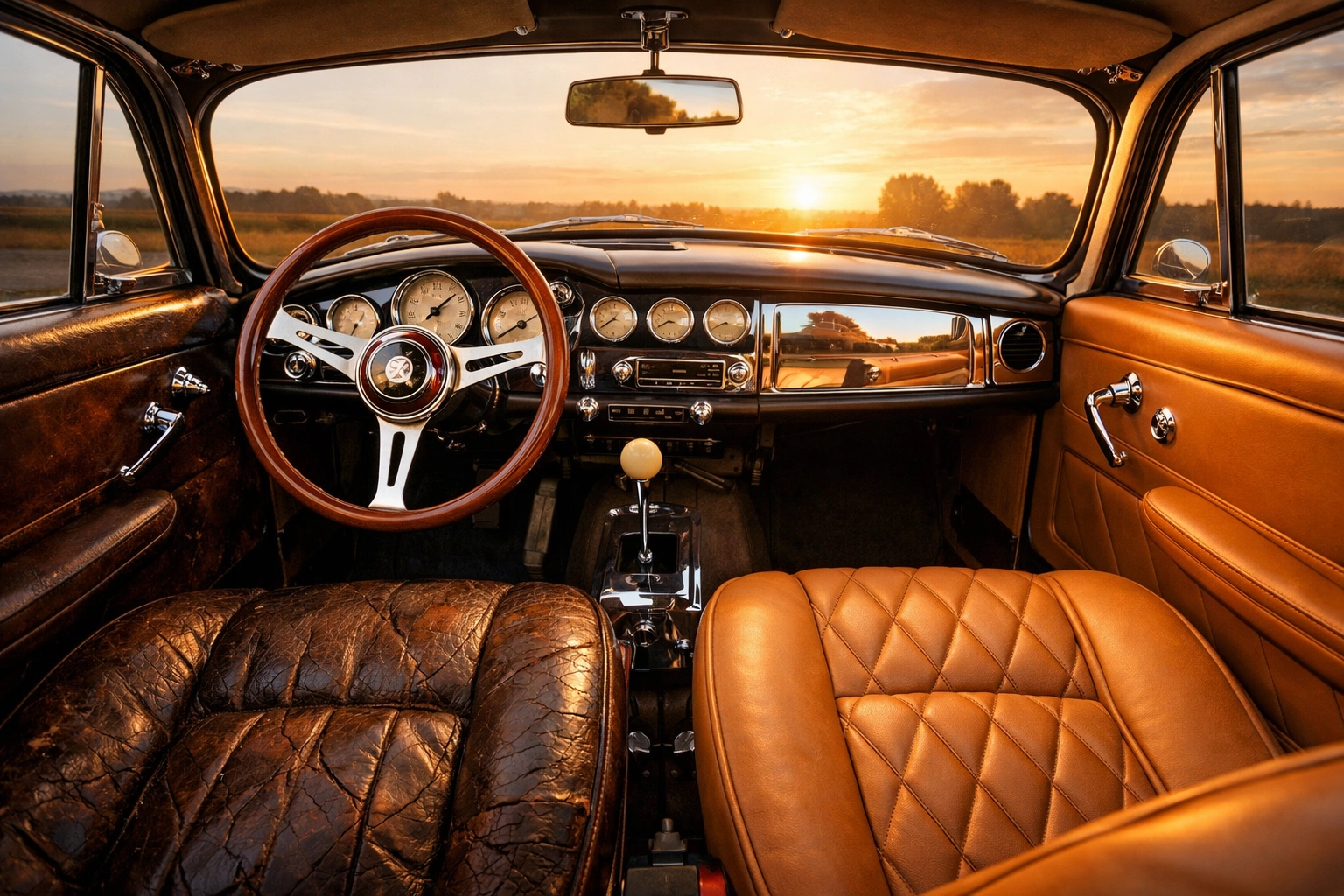
5. Overlooking the Classic Car Interior Restoration
When people think of restoration, they usually think of the engine and the paint. The interior is often an afterthought, left for the very end when the budget is running low. This is a mistake because the interior is where you actually experience the car.
A classic car interior restoration involves more than just new seat covers. It includes the dashboard, the gauges, the headliner, and the sound insulation. If you spend all your money on the outside but leave the inside smelling like 1974 and feeling cramped, you won’t enjoy driving the vehicle.
The Solution: Treat the interior as a primary phase of the project. High-quality upholstery and functioning gauges make a world of difference in the “feel” of the car. Check out our work on full-service restorations to see how a complete interior transformation brings a vehicle back to life.
6. Prioritizing Aesthetics Over Mechanical Safety
We’ve seen it many times: a car arrives at our shop with a $10,000 paint job but brakes that barely work and an engine that hasn’t had an oil change in a decade. It is a massive mistake to prioritize “the look” over the “the go.”
Mechanical reliability is the heart of your project. If you are in New York and need an engine repair in Greenwood Lake, you know that local driving conditions require a cooling system and fuel system that are in top-notch shape. Neglecting the engine or the cooling system can lead to a breakdown that ruins your beautiful new paint job: or worse, your entire engine block.
The Solution: Focus on the mechanicals first. Ensure the brakes, suspension, and engine are sound before you worry about the final polish. Understanding what to expect during an engine rebuild can help you prioritize your mechanical milestones. Don’t forget the small but vital tasks, like flushing the cooling system.
7. Trying to DIY Everything Without Expert Help
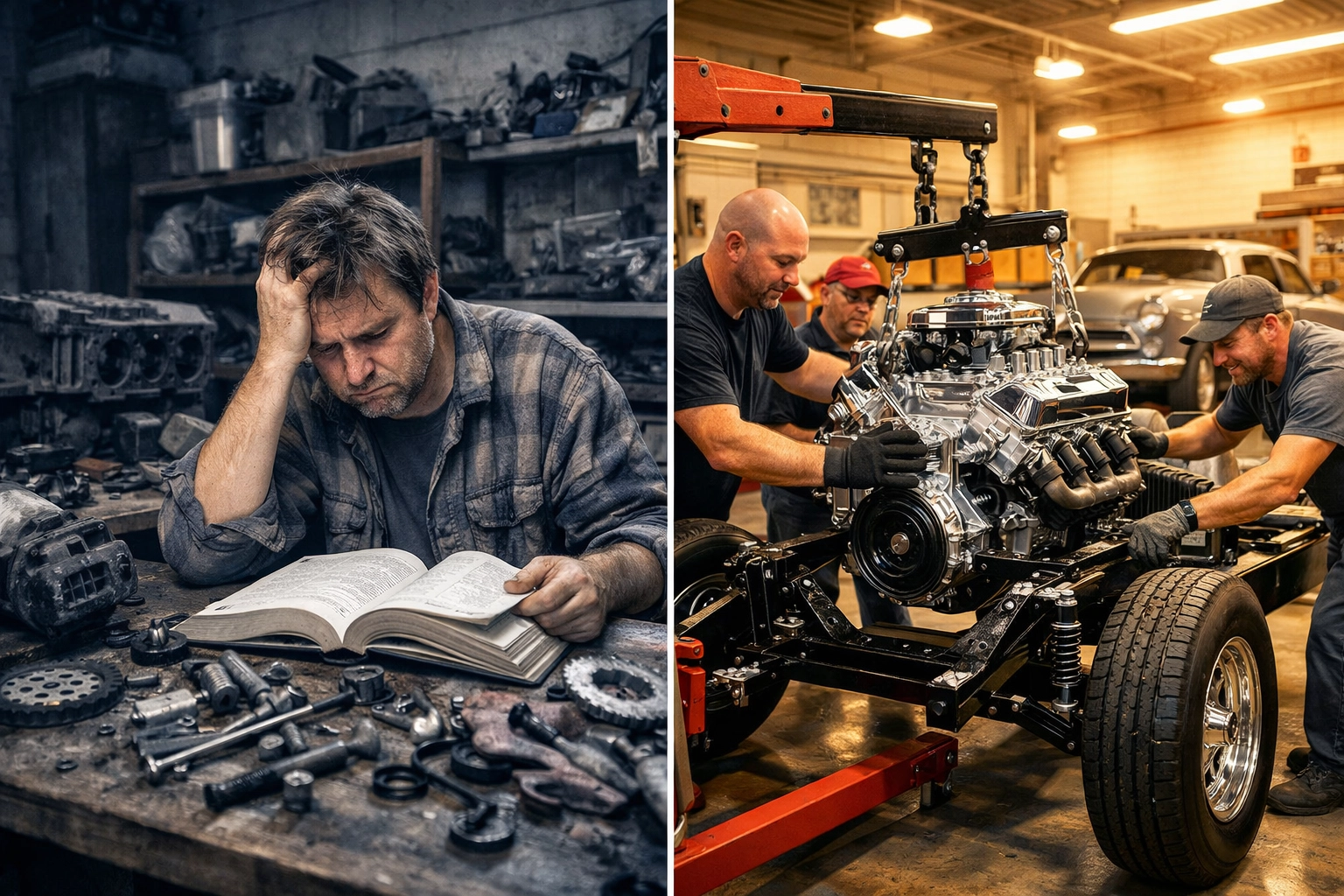
There is a great deal of pride in saying, “I did it all myself.” However, modern restoration requires a wide variety of highly specialized skills: welding, upholstery, precision engine machining, and high-end painting. While you can certainly learn these skills, the “learning curve” often results in mistakes that are expensive to fix.
Being a “Jack of all trades” can sometimes lead to a “master of none” result. Knowing when to call in the pros is the mark of a smart restorer. Whether it’s a complex electrical issue or a precision engine tune, seeking out auto repair services in Greenwood Lake, NY can save you months of frustration.
The Solution: Be honest about your skill level. Do the parts of the restoration you enjoy and excel at, but don’t be afraid to search for car restoration shops near me for the technical heavy lifting. At John’s Automotive Restoration & Repair, we love partnering with owners to handle the complex stuff while they focus on the parts of the build they love.
Bringing Your Vision to Life
Restoring a vintage vehicle is one of the most rewarding hobbies on the planet. It’s a way to preserve a piece of history and create something truly unique. By avoiding these seven common mistakes: planning ahead, budgeting realistically, and focusing on quality over shortcuts: you ensure that your project is a success rather than a source of frustration.
If you find yourself stuck or you’re looking for a partner to help with your vintage car restoration, we’re here to help. From precision engine repair in Greenwood Lake to complete frame-off transformations, the team at John’s Automotive Restoration & Repair has the tools and the passion to get your classic back on the road where it belongs.
Ready to take the next step? Contact us today or swing by the shop to talk about your dream car. Let’s make sure your restoration journey is a smooth one!